
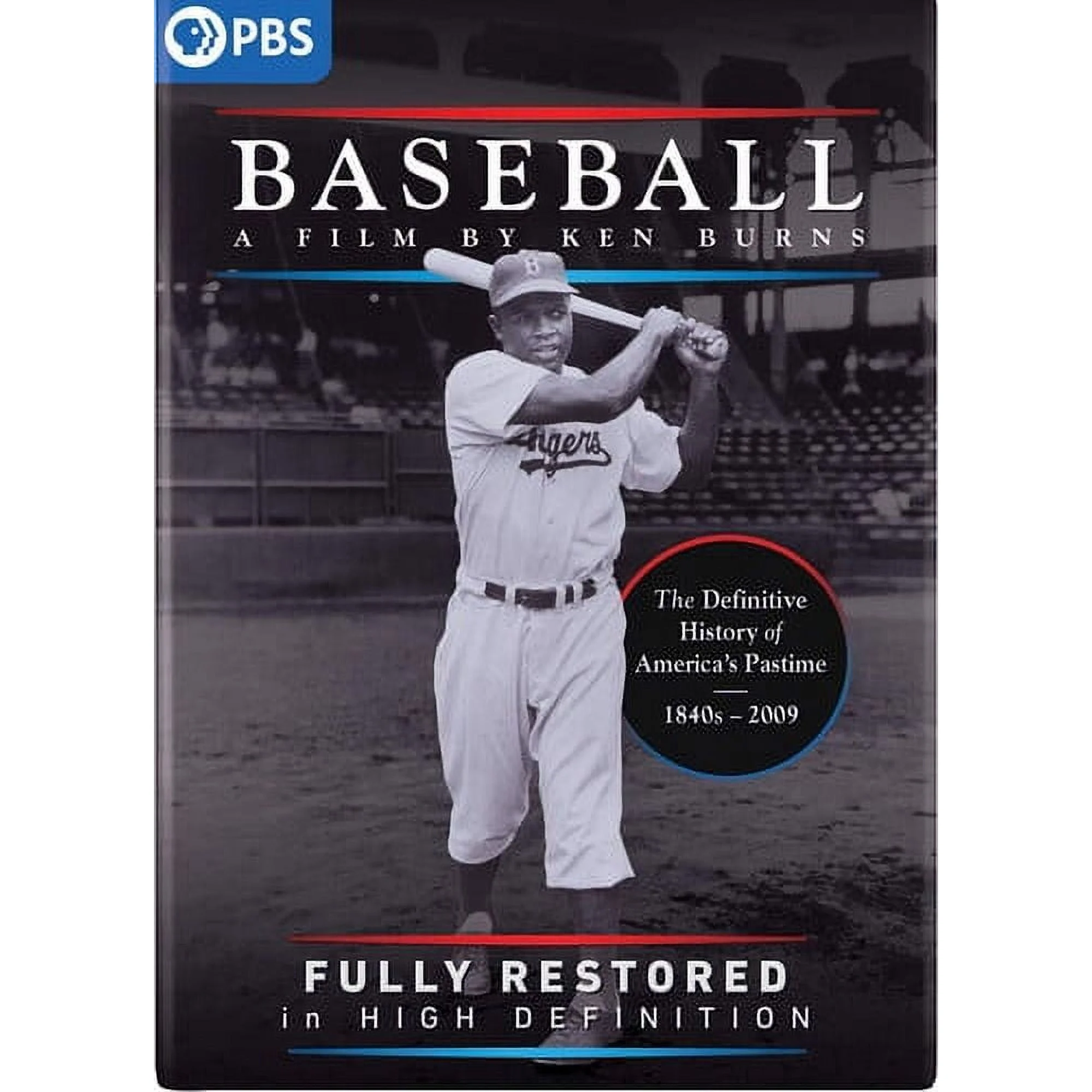
In 1994, PBS broadcast a 10-part documentary on baseball by Ken Burns. It traced the origin of the game up until that time. He later added a chapter called The Tenth Inning which covered the game into the 2000’s. Using old photos of the era and then later videos, usually pretty grainy, he chronicled the games rise to popularity and its darker side when gamblers paid players to throw games. A couple of years ago, I purchased the entire series on DVD from Ebay. It cost me about 20 dollars.
The newest version has 11 DVDs. It is maybe the most comprehensive compilation of baseball history ever shown on TV. It shows how Babe Ruth basically rescued the game after the Black Sox scandal in 1919. Ruth’s arrival as a hitter instead of pitching was a total game changer. He had already broken the MLB record for homers in a season twice with 11 in 1918 and then 29 in 19. He was sold to the Red Sox that winter and the next year he crushed 54 homers, more homers by himself that any team in the majors except the Phillies, who hit 60.
The series was narrated by John Chancellor, who was the anchor for NBC Nightly News from 1970-82. The original series was presented in nine parts. Each part was called an inning. Each inning would represent an era, and the prologue would mention notable moments in that era happening in the US and the world. The prologue would end with the playing of the Star-Spangled Banner, just like the beginning of a game. There would be a break in the middle of the inning signifying the bottom of the inning starting. Actors were used to portray some of the players and other key people involved in that era.
The First Inning: OUR GAME: The first inning was used to introduce the origin of the game and its rise in popularity as it evolved into a professional sport, becoming popular and receiving notoriety. As the nation grew, different forms of entertainment arose, and baseball became one of those. Old photographs and drawings are used to show the first players and where they played. 


The Second Inning: SOMETHING LIKE A WAR: This inning covers 1900-1910. It includes the formation of the American and National Leagues and the beginning of the World Series. The title comes from a quote from Ty Cobb, one of the games first stars, who is discussed in depth. Christy Mathewson and Honus Wagner are also featured. Wagner was probably the biggest star of that era. Wagner had 7 batting titles under his belt by 1910. His Pirates defeated Cobb’s Tigers in the 1909 World Series. Mathewson and Wagner received some credit for helping clean up baseball’s reputation as a rowdy brawling game. 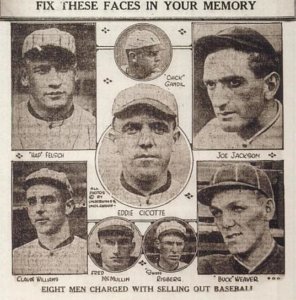
The Third Inning: THE FAITH OF FIFTY MILLION PEOPLE: 1910-1920. Follows the game as it goes through its greatest era of popularity yet. It focuses heavily on the Black Sox Scandal, taking its title from a line in the novel, The Great Gatsby, showing how easy it was for gamblers to tamper with the people’s faith in the game’s fairness. Another source of information about the scandal is the movie, Eight Men Out, which documents the 1919 Sox pretty accurately.
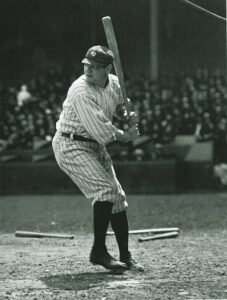
NEW YORK CITY – 1921: Babe Ruth is about to swing during a batting practice session before a game in 1921 at the Polo Grounds in New York City.
The Fourth Inning: A NATIONAL HEIRLOOM: This chapter covers the period of 1920-30. The change from the dead ball era to the era of the power hitter led by none other than Babe Ruth. After his trade to the Yankees, the game changed dramatically. They were also trying to recover from the Black Sox scandal. With Ruth leading the way, homers became the big draw in the game. Fans were in awe of how far Ruth could hit a ball. Burns in an interview said he wanted to name this chapter “That Big Son of a Bitch”, a nickname some gave Ruth during that period. He went with what the press was calling the Babe instead. Yankee Stadium was designed with Ruth in mind. 
The Fifth Inning: SHADOW BALL: Covering 1930-40, much of this episode covers the Negros Leagues and its great players who were denied the chance to play in the majors. It also covers the decline of Babe Ruth, and the rise of new favorites like DiMaggio and Feller, Jimmy Foxx and Hank Greenburg. Lou Gehrig, always in Ruthy’s shadow finally gets his due. It also details baseballs response to the great depression and the first All-Star game. 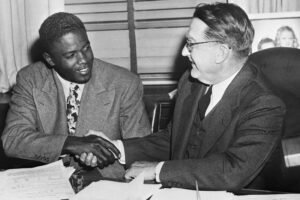
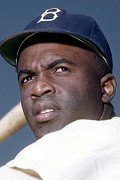
The Sixth Inning: THE NATIONAL PASTIME: This segment covers 1940-50, when the game became what it had always said it was, the national pastime. It covers how WWII affected the game and the nation with many stars joining the military. It also covers men of color finally being allowed to compete in the major leagues led by Jackie Robinson and the Dodgers. In earlier episodes, they touched on how a black player was not allowed to lodge at the same hotel as his white players while Branch Rickey was managing Wesleyan University. He never forgot that humiliation the young player felt. Rickey was credited with many innovations including the creation of the modern farm system. 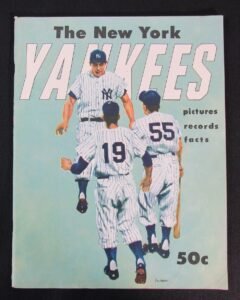
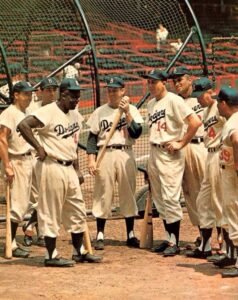
The Seventh Inning: THE CAPITAL OF BASEBALL: Covering 1950-60, it chronicles the dominance of the three teams in New York, the Yankees, Dodgers and Giants. Between them, they won 8 World Series between 1950-58. It also showed how the demographics of the game changed as people began moving out of the cities and into urban areas. This shift was one of the reasons that teams like the Browns, moved to new cities. Unable to compete and draw crowds in St. Louis, the Browns relocated to Baltimore and became the Orioles in 1954. The A’s lef6t Philadelphia in 1955. The Dodgers and Giants would follow in 1958 as they moved to the west coast. It also follows the rise of stars like Mickey Mantle, Willie Mays, Ernie Banks and Frank Robinson. It also covers the Boys of Summer and their chase for their first World Series win. 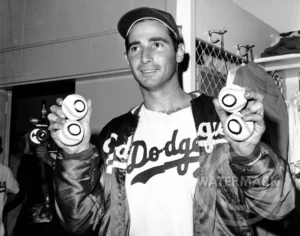

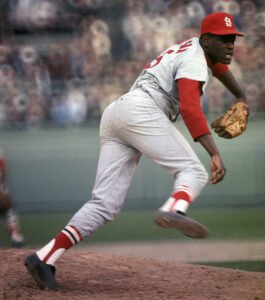
The Eighth Inning: A WHOLE NEW BALLGAME: This episode covers 1960-70. With the Dodgers and Giants now on the west coast, baseball expands, placing 2 new teams in each league. In the AL, teams are placed in Los Angeles and Washington D.C. and the Senators moving to Minneapolis and becoming the Twins in 1961. In 1962, the Mets in New York and the Colt 45s in Houston begin play in the National League. The Athletics would move for the second time in 1969, moving to Oakland. Baseball would expand again in 1969, adding teams in Seattle and Kansas City in the AL, San Diego and Montreal in the NL. The Seattle team, the Pilots, lasted one season and then moved to Milwaukee and became the Brewers.
Pitching would dominate baseball once again during the 60s with Aces like Koufax, Gibson, Drysdale, Marichal, Ford, Palmer. Ruths home run record falls to Marris, baseball is losing fans to football and there are labor questions. Los Angeles would win 3 World Series; the Yankee dynasty began to decline as their biggest stars age. Once the AL’s most powerful team, the decade sees the Yankees lose series in 60, 63 and 64. The Yankees would not appear in another World Series until 1976. Labor and expansion are big topics in this episode. 
The Ninth Inning: HOME: The final inning of the original series covers the period of 1970-1992. While the game managed to survive the 60s, there still were a lot of changes coming to the game. Major changes were the formation of the MLBPA, collusion by the owners, free agency, and drugs as well as gambling scandals once more. The game does win back some fans with things like the exciting 1975 World Series with the Reds and the Red Sox, the return of the Yankees to prominence in the mid 70s. The series ended with a bold statement that baseball had survived wars, depressions, pandemics and numerous scandals and thus would never be stopped. Two franchises were added in 1977, the Toronto Blue Jays and the Mariners in Seattle. In 1993, they added the Colorado Rockies and the Forida Marlins.
In 1994, the year the series was first aired on PBS, the World Series was cancelled for the first time since 1904. Baseball was thus stopped due to labor issues.
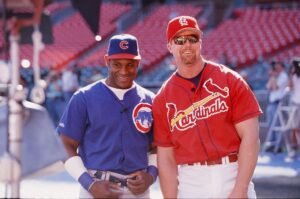
ST. LOUIS, MO – SEPTEMBER 7: Mark McGwire of the St. Louis Cardinals and Sammy Sosa of the Chicago Cubs joke before the game at Busch Stadium on September 7, 1998, in St. Louis, Missouri.
The Tenth Inning: In 2010, PBS broadcast a 2-part addition to the series. Part one was the top of the 10th. This four-hour segment covered 1992-2010 and discussed the fans disgruntlement and work stoppages in the 90’s. It also chronicled the home run race between Mark McGwire and Sammy Sosa that helped bring fans back to the game. Part 2, another four-hour segment, spent a large amount of time on the steroid scandal in baseball and how the game helped the nation heal a little after 9-11. It also talked about how even in the middle of the biggest economic crisis since the great depression, the game was as popular as it has ever been.
In 1998, baseball expanded to its current level of 30 teams adding the Arizona Diamondbacks and the Tampa Bay Rays. Milwaukee moved to the National League in 1998. The Houston Astros moved to the American League in 2013. Baseball realigned into three divisions in each league in 1994.
They also have released since then a companion tabletop book, which I received as a gift this Christmas. During the series, there were many interviews with people of prominence who were influenced by the game. Arthur Ashe, on the impact of Jackie Robinson. Mario Cuomo, the former NY Governor who once was a Pirates prospect, Billy Crystal, who was a huge Mantle and Yankee fan. George Plimpton, Tip O’Neill, Studs Terkel, a writer who actually had a role in the movie Eight Men Out.
Players and baseball people who were interviewed included Hank Aaron, Red Barber, Bob Feller, Billy Herman, Curt Flood, Mickey Mantle, Buck O’Neil, Pedro Matinez, Jimmy Reese, Babe Ruth’s roommate and a longtime coach, Vin Scully, Ichiro and Ted Williams. Many actors portrayed different players who were no longer living. Keith Carradine as Shoeless Joe, Delroy Lindo as Rube Foster, Gregory Peck as Kid Gleason and Connie Mack. Jason Robards became the voice of Kennesaw Mountain Landis, John McGraw, and the man that sold Babe Ruth to the Yankees, Harry Frazee.
For young fans who do not know much about the history of the game, it is a great resource of information and history that can be viewed over and over. For us older fans, it is a trip in time back to the eras that made us love the game as we do. For Dodger fans, there is plenty of the Dodgers history packed into the series including their rise to becoming a baseball power and helping the majors move west of St. Louis. If you do not have it in your DVD collection, I would strongly suggest purchasing it.


































It might be time to rewatch The Sopranos start to finish. Like reading a great novel.
Ken Burns does great work. Need to look this up.
There are several available on Ebay. I do not know where my friend got the book, but I am sure it can be found.
Thanks Bear.
I wonder how many young fans give a rats ass about baseball from a hundred years ago. My grandfather had a few stories about playing what he called The Texas League back in the 20s and 30s. He was a pitcher/catcher (taught me grips and the value of a change up when I was 12) playing all over the south year round while he also worked as a roughneck in oil fields. He later became head bartender for the Bel-Air Hotel and was hired by Howard Hughes to run the bars in his Las Vegas hotels. What a life. Wish he was still around. I have so many more questions now than I did in my teens and early twenties.
There’s an article in the LA Times this morning explaining how tv money is shared among organizations in MLB. If there is an accountant here (Jeff?) that can explain it in sophomore terms, my reading level at this age, I would appreciate it.
What is the title of the article and who is the author? The Dodgers have a vlear advantage to revenue sharing of TV revenue due to a deal they made with MLB once they came out of bankruptcy.
Dodgers Reap Big Bucks From TV Deal
Bill Shaikin
Badger, I am working on my finance post. Way too much information, and until the owners open up their books, highly questionable.
But I will read this article and try and answer to the best of my knowledge, although those brain cells are quickly diluting.
“I wonder how many young fans give a rats ass about baseball from a hundred years ago”. Probably not many. But it’s not a baseball thing. I doubt many of today’s NBA fans know about Bob Cousy, Bob Petit, Elgin Baylor or Oscar Robertson. Y.A.Tittle? Johnny Unitas? Jim Brown? How many young NFL fans even know who these former greats were. Young people live in the present— it’s not until they get older— like us — that the past is considered.
I wonder how many young ‘people’ give a rats ass about FDR, WWII, JFK, the Beatles or VietNam. That’s the way it is
Which is exactly the reason so many people repeat the mistakes of the past, those who ignore history are bound to repeat it.
My pleasure Badger. I just happen to love history. I count among my DVD collection, The Greatest Generation, some Victory at Sea DVDs. One about baseball bloopers. A great DVD narrated by Scully about the Dodgers championship seasons and one on USC football. When I was living at Hathaway Home for Children in Highland Park, one of the houseparent’s there was a huge baseball fan who had lived most of his life on the east coast in New England. He was a Dodger fan and went to Vero Beach many times in the 40’s. He had photos of Reese, Snider, Furillo, Camilli, Walker, all of those guys. And he saw both Ruth and Gehrig play as a youth. Loved listening to him talk baseball. He lost his son in WWII about 3 weeks before the war ended. He was on Okinawa.
Bear— when I was in college I took a History of WWII class. In each class, the instructor showed a Victory at Sea episode. You probably would have aced the class!
US History was my best class in high school. I read about history all of the time. Naval history was because my dad was on the USS Nevada at Peral Harbor.
You ever read A True History of the United States by Daniel Sjursen? It’s an eye opener.
I will have to check on that book at the library.
Yankees just DFAd Siani. They made a trade with the Rockies for Angel Chivilli. .
Bear, I hate to go all Bluto on you, but above you mentioned that in 1998 the addition of the Snakes and Rays brought the total to 32 teams. Actually, 30 teams. Which is probably a half dozen too many.
Very good write on the Burns series. The first 5-6 innings were the most interesting to me. As has been revealed in Burns’ some of most recent works that he can present some of his own interpretation of “historical facts”.
Look forward to watching the series for the fourth time. Again, thanks for the article.
Carry on.
One little mistake! Which has now been corrected. The plan is still to expand to 32 teams making for a balanced league.
The Dodgers have confirmed that Roki Sasaki will be a full-time starter in the 2026 season, but manager Dave Roberts has stressed the need for him to develop an effective third pitch to succeed in the role. The team views this year as crucial for his development.
People forget how dominant Sheehan was toward the end of the season. Was holding his own with other four.
(Man, what an all-time rotation)
Hopefully more than one will put together a complete season.
Yeah, Snell needs a full season.Glasnow too.
NBC and Clayton Kershaw are nearing a deal for the future Hall of Fame pitcher to have a role in the network’s MLB studio coverage.
Keith Law held a chat after releasing his Top 100 and I thought the following question and his answer were interesting:
“Question: With De Paula potentially sticking in the outfield, should the Dodgers look to move Hope or Sirota for an infield prospect? Specifically at SS if Morales and Freeland can’t stick there.
Law’s Response: Hope is the guy I’d be most willing to trade because of all their main OF prospects he has the highest bust potential.”
I thought the idea of using some of our overstock of outfield prospects to trade for some infield help was a good idea, but of course you have to correctly predict which guy or guys won’t become major stars (a la Yordan Alvarez).
Since Teo won’t be here for more than another year or two and we can’t be 100% certain that Pages will actually have a good MLB career, we don’t want to trade our best outfield prospect. That said, it’s extremely unlikely that JDP, Hope, Sirota and Quintero all become starters for the Dodgers.
What Law is saying makes perfect sense to me. The Dodgers are a high ceiling team. Hope does not give the high ceiling vibe and is more of a low floor guy. OTOH, De Paula not only has the higher ceiling, but a higher floor as well. IMO Quintero and Sirota are the two to watch.
If De Paula is able to transition to 1B, I would hesitate to trade him. If Friedman doesn’t think De Paula can, then trade him soon. But like with Muncy, just because I’ve wanted to trade Muncy it’s not like I didn’t want something good in return.
I’ll trade a bunch of Dodger prospects for a 60+ Prospect.
Austin Barnes signed a MiLB deal with NYM. MY gues is that Stearns would like Barnes to mentor the young pitching staff, especially the top prospects in MiLB. Good deal for NYM.
Really don’t understand why Andrew didn’t offer him the same kind of job, unless cutting him loose left a bad taste in his mouth and he decided he wasn’t interested in coming back in another capacity.
What I meant to say was that I would have thought AF would have offered him a job mentoring the young catchers and pitchers, but I guess that would have meant retiring which he obviously isn’t ready to do yet, and/or he’s pissed at Andrew for releasing him.